
How Drones Are Useful in Structural Inspection
The case for drone inspection is not that it is novel. It is that the alternative — putting a person on a lift, a ladder, or a rope, at height, to look at something that may turn out to be fine — is slow, expensive, and the most dangerous part of the job.
Access without the access equipment
The traditional cost of inspecting anything tall is mostly the cost of reaching it. Boom lifts have to be scheduled and staged. Scaffolding takes days to erect for an inspection that takes an hour. Rope access needs certified technicians and a rigging plan. All of that happens before anyone has looked at a single square foot of the structure.
A drone reaches the same surfaces in minutes and holds position while the camera does the work. On a steep or fragile roof, that also means nobody walks on a surface whose condition is exactly what is in question — which matters on aging membrane, tile, and slate, where the inspection itself can cause damage.
What gets inspected this way
The technique suits anything tall, large, or awkward to reach:
- Roofs — membrane seams, flashing, penetrations, ponding, hail and wind damage on commercial and residential structures.
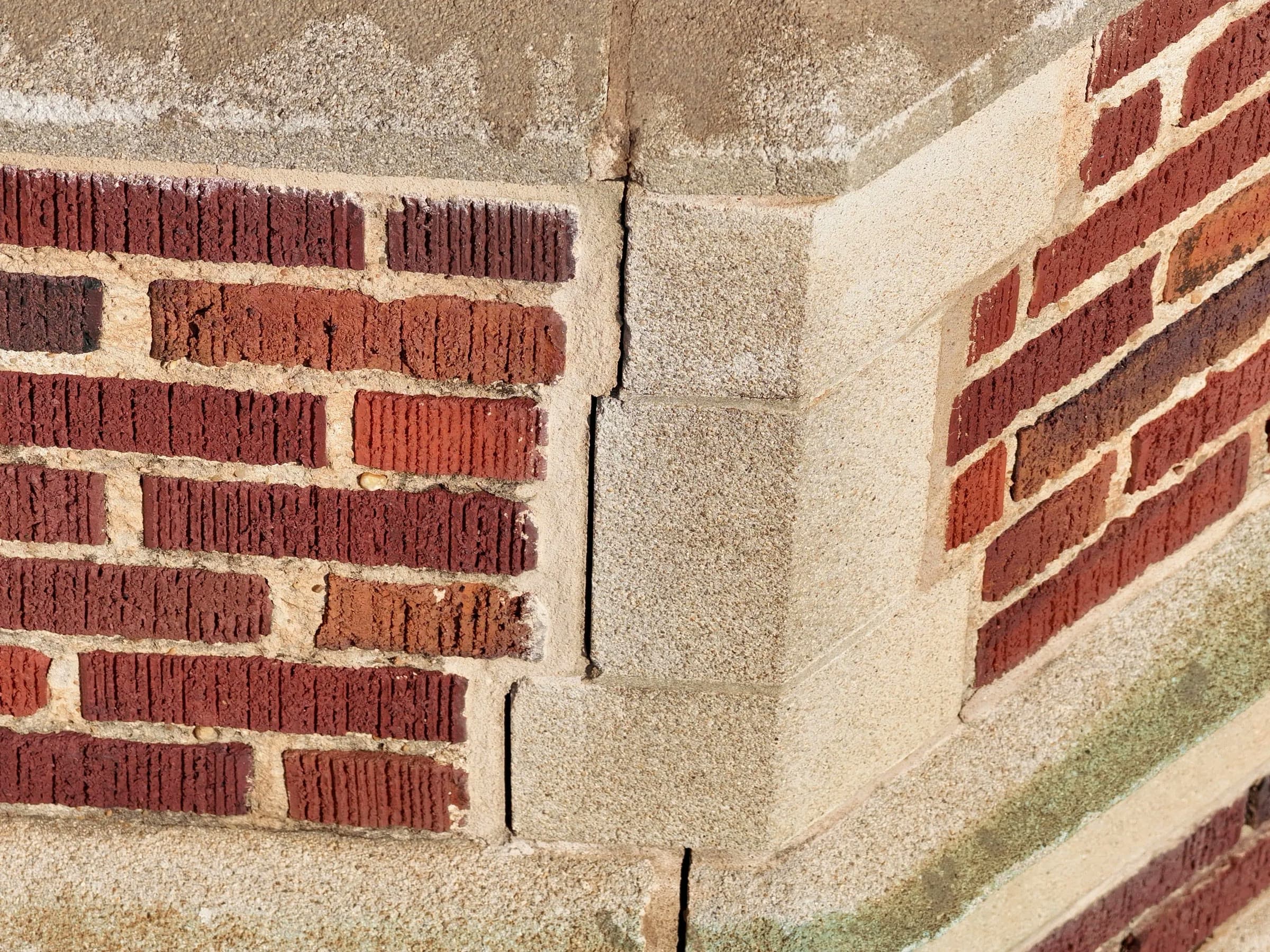
- Facades and building envelopes — spalling, cracking, sealant failure, masonry displacement, window and curtain wall condition.
- Bridges and infrastructure — bearing seats, girder undersides, and pier condition, which otherwise need a snooper truck and a lane closure.
- Towers, stacks, and antennas — where climbing is a permit-and-crew operation rather than an afternoon.
- Wind turbines and solar arrays — blade leading edges, surface erosion, and panel condition across a full array.
- Storage tanks and industrial structures — shell and roof condition without confined-space or elevated entry.
The documentation is the real deliverable
A person on a lift produces a written report and a handful of phone photos. A drone inspection produces complete, systematic, high-resolution coverage, and that changes what the inspection is worth after the fact.
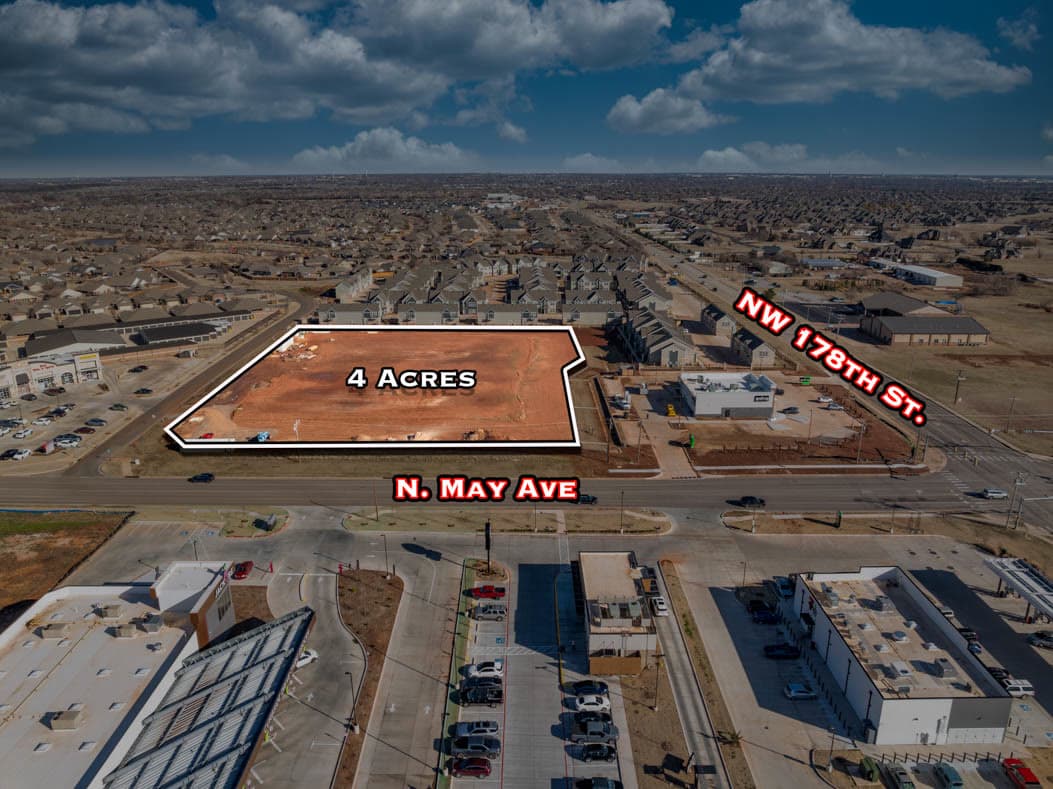
Because the imagery is geotagged and timestamped, it establishes condition on a specific date. That matters enormously in insurance claims, in warranty disputes, and in any argument about whether damage predates an event. A commercial roof documented every year gives a building owner a defensible history rather than a memory.
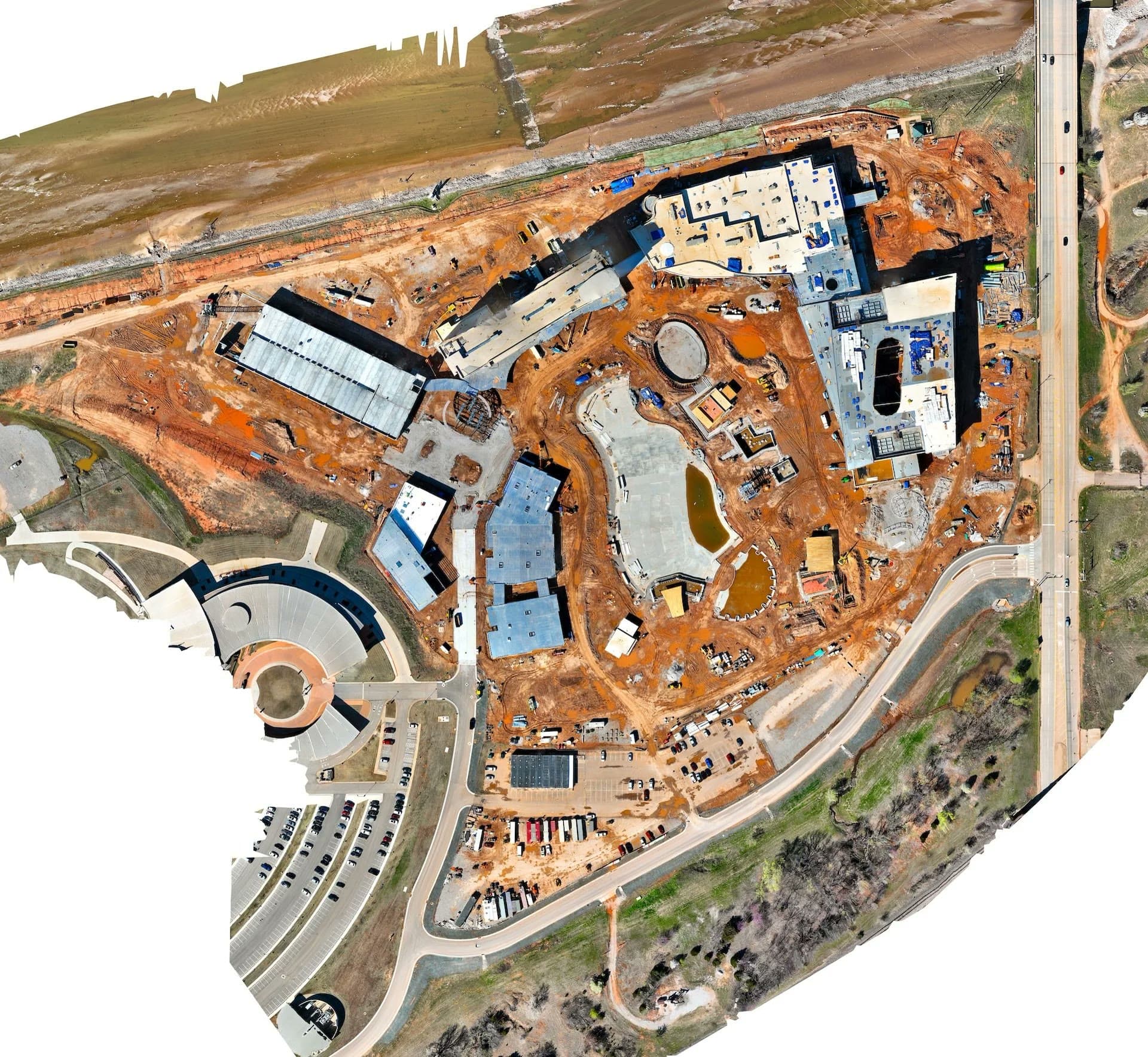
Modern sensors resolve hairline cracking and individual fastener condition from a standoff distance that keeps the aircraft well clear of the structure. For a large facility, the same flight data can be processed into a 3D model, so findings can be located precisely on the building rather than described in prose.
Where thermal changes the answer
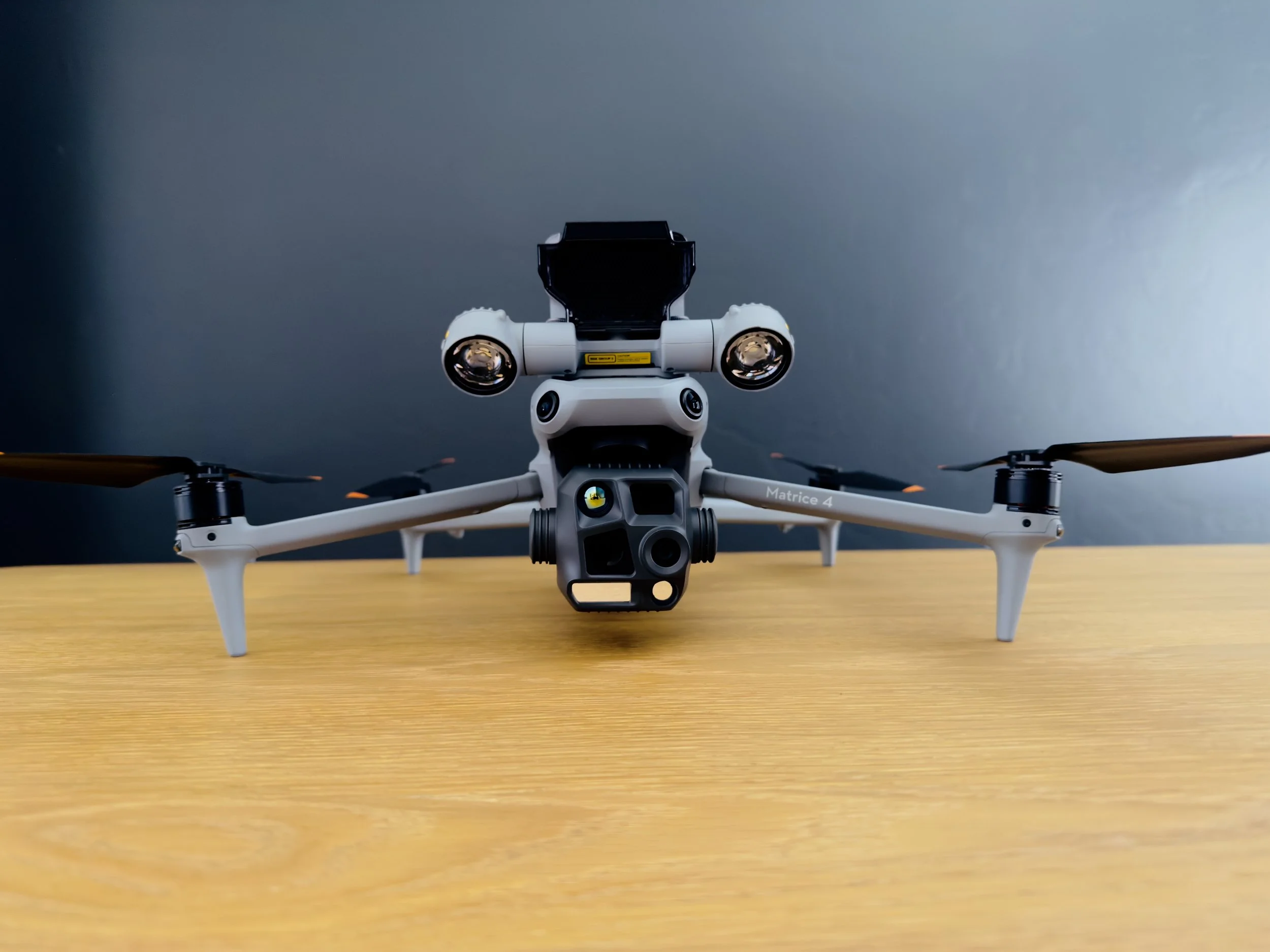
A visual camera shows what a surface looks like. A radiometric thermal sensor shows where heat is moving, and that reveals problems invisible in daylight — trapped moisture under roof membrane holding heat after sunset, missing or displaced insulation, water intrusion tracking through an assembly, overheating electrical connections in a rooftop unit.
Thermal work is timing-dependent in a way visual work is not. Roof moisture surveys run in the window after sunset, when wet areas release stored heat more slowly than dry ones. Fly at the wrong time and the scan shows nothing at all, which is why thermal inspection is a scheduled service rather than something added to a daytime flight on request.
What it does not replace
Drone inspection is a documentation and triage tool, not a substitute for a qualified engineer's judgment. It shows condition; a structural engineer interprets what that condition means. Anything requiring physical testing — core samples, moisture meter readings, adhesion tests, sounding — still requires hands on the structure.
The realistic workflow is that the drone covers everything, quickly, and identifies the small percentage of the structure that actually needs a person. That is where the cost savings come from: not eliminating the close-up inspection, but aiming it.