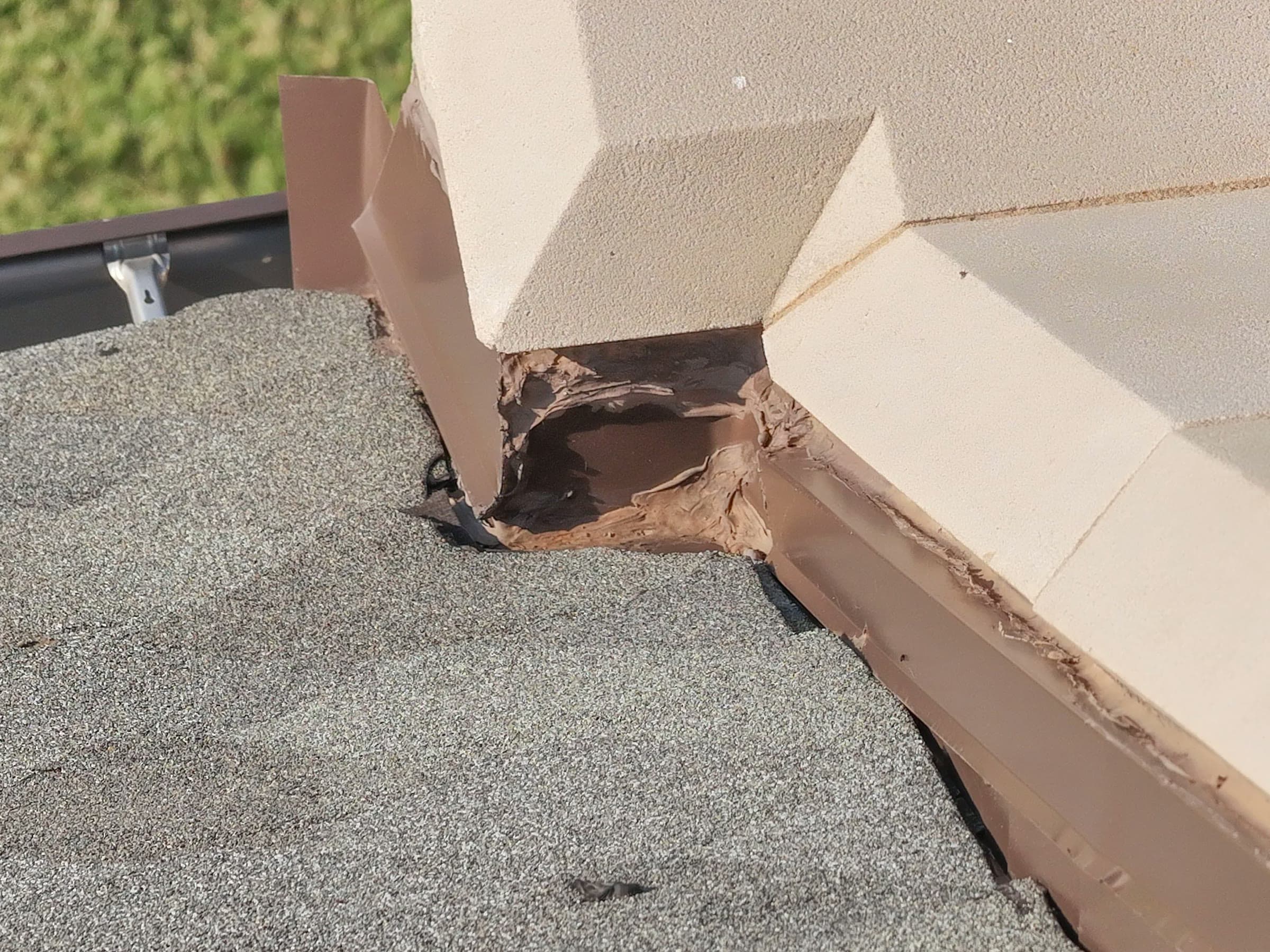
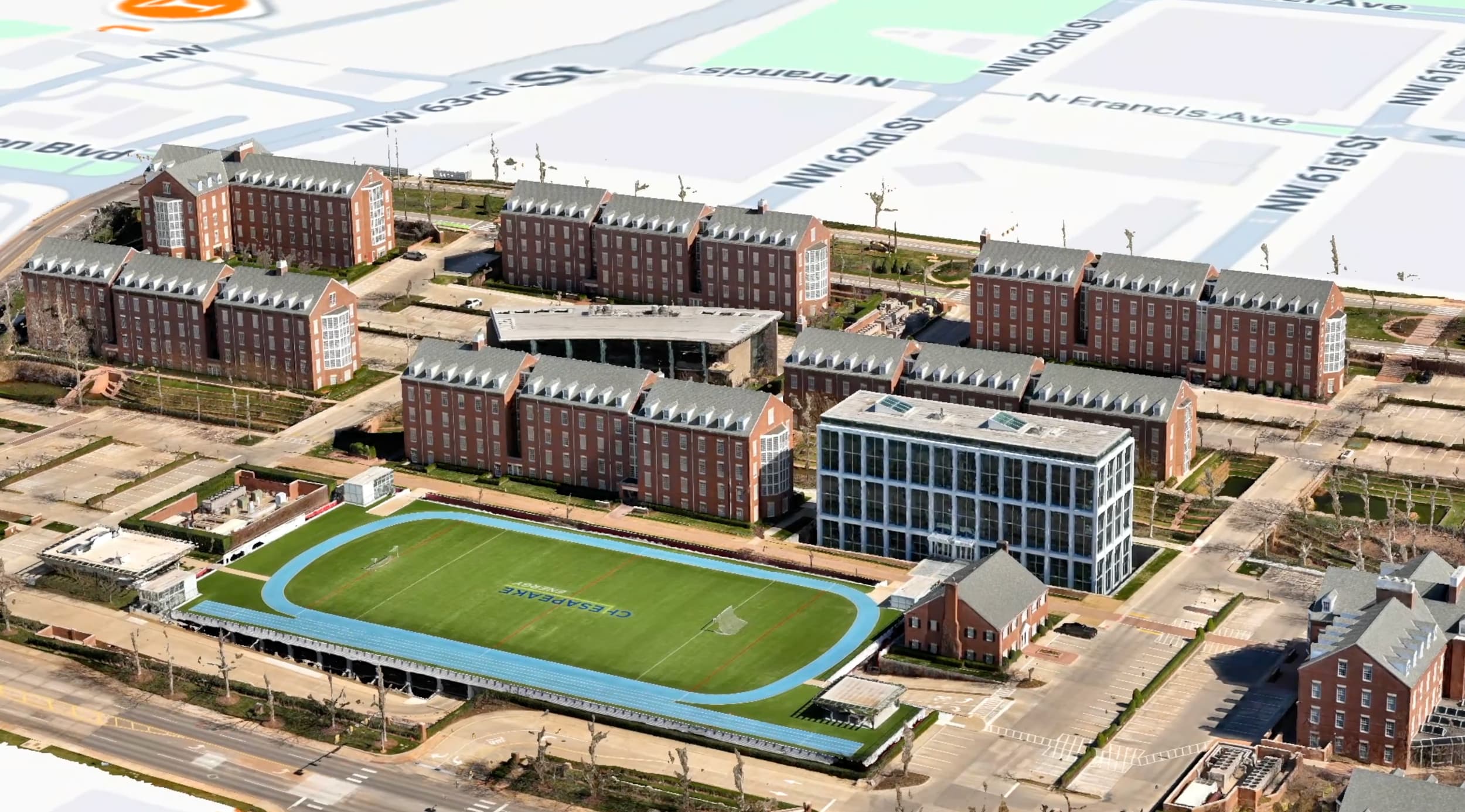
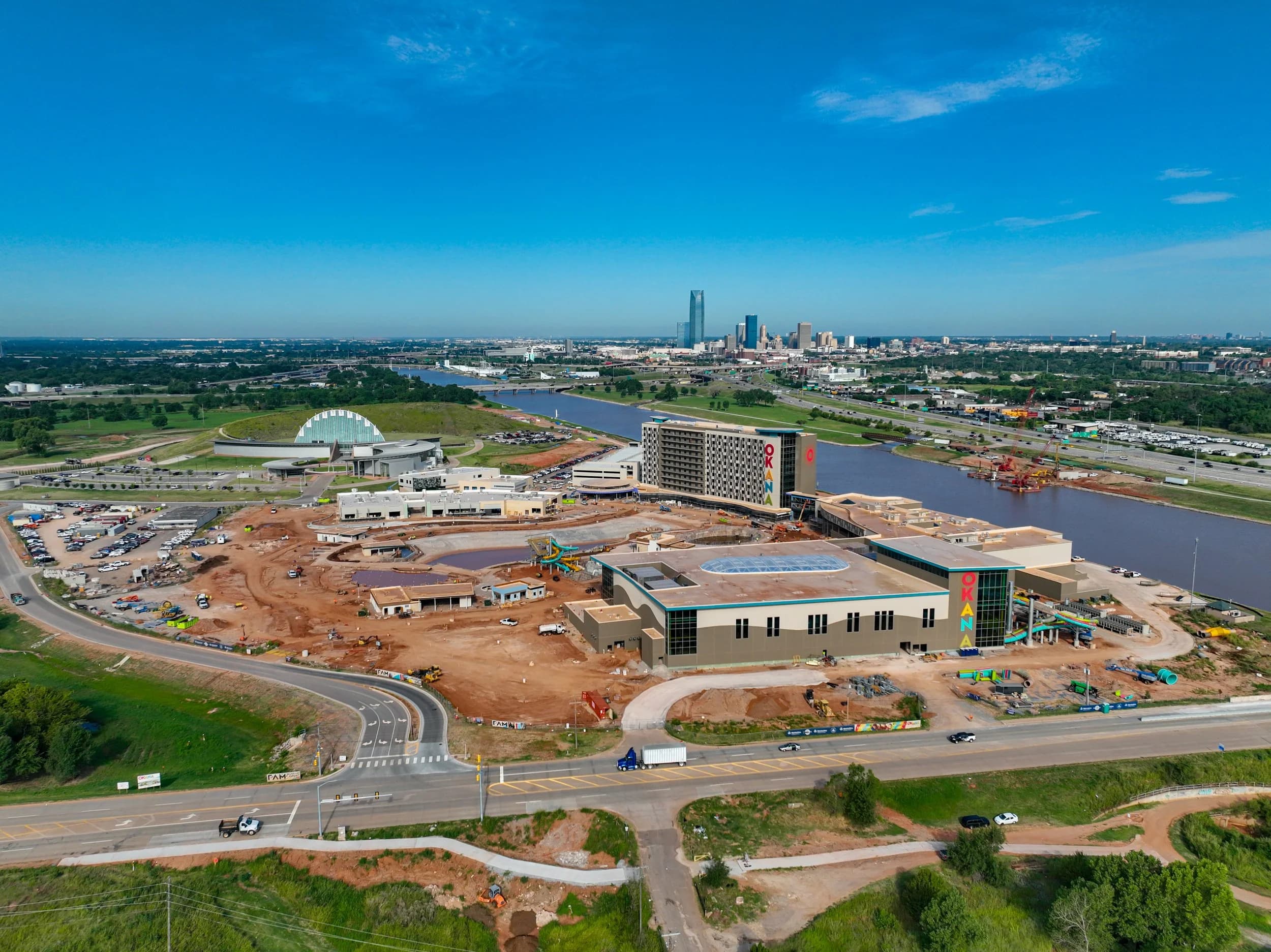
Thermal imaging detects heat differences invisible to the eye: moisture, electrical faults, or insulation gaps, across roofs, utilities, solar panels, and wind turbines. Solar panel dust, cracks, or faulty connections that quietly reduce efficiency show up clearly in a thermal pass.
The comparison below shows the same structure in visual and thermal side by side.
A thermal image that isn't radiometric is a picture. Radiometric data carries a temperature per pixel, which is what turns a warm patch into a finding.
Full thermal captures retaining per-pixel temperature data, so anomalies can be measured rather than eyeballed.
Every thermal frame shot with a matching visual frame from the same position, so a finding can be pointed at in both.
Each hot or cold anomaly located, measured against its surroundings, and described — moisture, heat loss, or electrical fault.
For roofs and solar arrays, thermal frames stitched into one map of the whole surface with anomalies pinned in place.
Panel-level and string-level faults identified across an array, so remediation goes to the right inverter rather than the whole site.
Radiometric
Temperature per pixel
24-48 h
Typical turnaround
Paired
Thermal + visual frames
The same roof scanned at the wrong hour shows nothing. Most of the skill in a thermal survey is deciding when to fly it.
Moisture under a membrane shows during the cooling period after sunset, when wet insulation holds heat the dry surface has already lost. Electrical faults show under load. The survey is booked to the physics, not the diary.
Thermal windowEmissivity and reflected temperature set for the surface being scanned, altitude fixed so every frame is at the same resolution, and the grid planned for full coverage with overlap.
CalibratedBoth sensors capture the same grid in one pass, frame for frame, so no anomaly ends up without a matching photograph of what it actually is.
Paired captureAnomalies identified against their surroundings, classified, located, and written up with both images attached and a plain summary at the front.
24-48 hFailures that stay invisible in a normal photograph until they get expensive.
Wet insulation under an intact membrane — the failure that spreads quietly for a year and turns a patch repair into a re-roof.
Connections, breakers, and conductors running hot under load, on switchgear and along distribution, before they fail.
Dust, cracks, hot cells, faulty connections, and dead strings that quietly drop an array's output without triggering an alarm.
Insulation gaps, air leakage, and thermal bridging across a façade — commissioning evidence and an energy case in one survey.
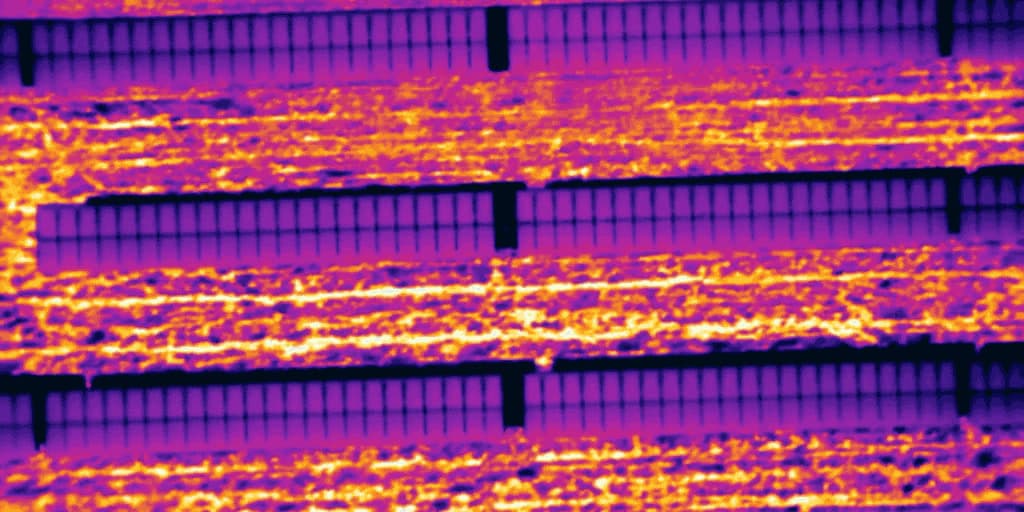
The comparison below is the point of the service: a solar array that looks perfectly healthy in a visual frame, with faults that are unmistakable in thermal.
Thermal runs across roofs, utilities, solar, oil and gas facilities, and wind turbines. It's also what makes our search and rescue work possible, on the same aircraft.
 Solar Array · Visual
The array as a normal camera sees it: nothing obviously wrong.
Solar Array · ThermalThe same array in radiometric thermal — hot cells and string faults visible immediately.
 Radiometric · Scene
Radiometric capture carrying a temperature value per pixel, not a false-colour picture.
An ordinary thermal image is a false-colour picture — it looks hot, but you can't measure it. A radiometric image stores a temperature value for every pixel, so an anomaly can be quantified, compared against its surroundings, and defended in a report. Everything we deliver is radiometric.
It depends what you're looking for. Roof moisture surveys are flown in the cooling period after sunset, when wet insulation holds heat the dry roof has already given up. Electrical inspections are flown under load, during operation. Booking a thermal roof scan for a convenient mid-morning slot is how you get a survey that finds nothing.
Accurate enough to identify and rank anomalies reliably, which is what a survey is for — relative difference across a surface matters more than an absolute figure. Emissivity and reflected temperature are set for the material being scanned rather than left at defaults.
Thermal work is flown and analysed in-house, paired frame-for-frame with visual so findings can be verified rather than taken on trust.
Yes, and it's one of the clearest uses of the service. A full array is flown as a grid and stitched into a thermal orthomosaic, with faults resolved down to individual panels and strings so remediation is targeted rather than site-wide.
Not well, and we won't pretend otherwise. Surface water, rain, and strong solar loading all mask the differences a survey depends on. If conditions won't produce a defensible result we reschedule rather than fly and hand over something inconclusive.