
How to Choose a Drone for Photography
There is no best photography drone in the abstract, because the disciplines make incompatible demands. The aircraft that excels at real estate is the wrong choice for landscape work, and both are wrong for events. Start from what you shoot.
Real estate and property
Real estate is high-volume, fast-turnaround, and shot close to buildings — often in tight suburban lots with trees, power lines, and neighboring structures inside the flight envelope. Precision at low altitude matters far more than outright image quality, and a compact aircraft with strong obstacle sensing beats a larger one you are nervous about flying near a roofline.
Because these shoots are short and repetitive, portability and setup speed have real financial value. Shooting six properties in a day rewards an aircraft that unfolds and launches in under two minutes. A one-inch sensor is more than adequate — the images are destined for listing sites, not gallery prints.
The trap here is buying too much aircraft. A large professional platform slows down every stop on the route and delivers no visible benefit in a listing photo.
Landscape and fine art
Landscape work inverts almost every real estate priority. Sessions are single-location, unhurried, and timed to light that lasts twenty minutes. Nobody cares whether setup takes ten minutes; everybody cares about dynamic range at sunrise.
This is where a larger sensor genuinely pays for itself, because the defining condition is high contrast in low light — a bright sky against a dark foreground, exactly the situation that separates sensor tiers. Bracketing support, raw capture, and clean shadow recovery matter more than obstacle sensing, since you are usually flying in open terrain.
Endurance matters differently too. Waiting out light while holding position burns battery, so carry more than the shoot appears to require.
Events, sports, and action
Events introduce a constraint that has nothing to do with cameras: people. Flying over crowds is restricted, and operating near non-participants requires either an aircraft that meets specific FAA operational category requirements or an operating plan that keeps the aircraft clear of them. That regulatory reality shapes the equipment choice before image quality enters the conversation.
Beyond that, events demand fast subject tracking, quick reframing, and quiet operation. For genuinely kinetic work — following a rider, a car, or a run of action — FPV is a different discipline with a different airframe entirely, and it trades stability and safety margin for speed and intimacy in a way that requires a separate skill set to fly responsibly.
Architecture and construction
Architectural work needs geometry to be right. Rolling shutter distortion that goes unnoticed in a landscape becomes obvious on a building's vertical lines, so a mechanical shutter is close to mandatory. So is precise positioning, because architectural sequences are usually repeated — the same angle, month after month, so images can be compared.
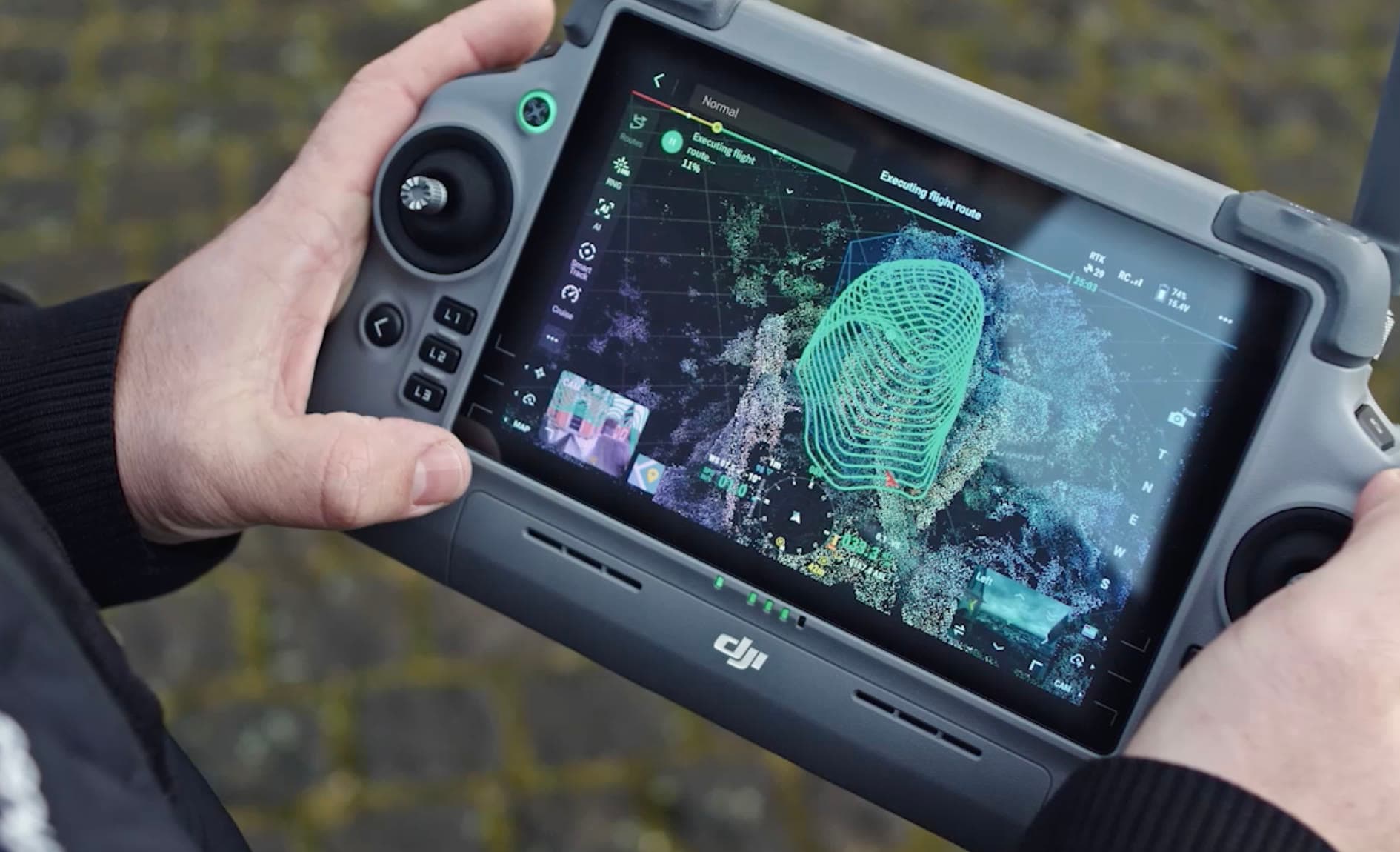
If the work extends into documenting progress or producing anything measurable, the requirements shift again toward mapping: waypoint automation, consistent altitude control, and RTK positioning if the output has to align with a survey.
If you shoot several of these
Most working photographers do, and the honest answer is that a single aircraft will compromise somewhere. The usual resolution is a capable one-inch-class aircraft as the everyday tool, with a specialist platform added later for whichever discipline is generating the most revenue.
Buy for the work you are actually being paid for now, not the work you imagine doing next year. The second aircraft is much easier to justify once the first one is booked.